
10 Signs Your Mercedes Needs a Professional Diagnostic Check
2026-08-27
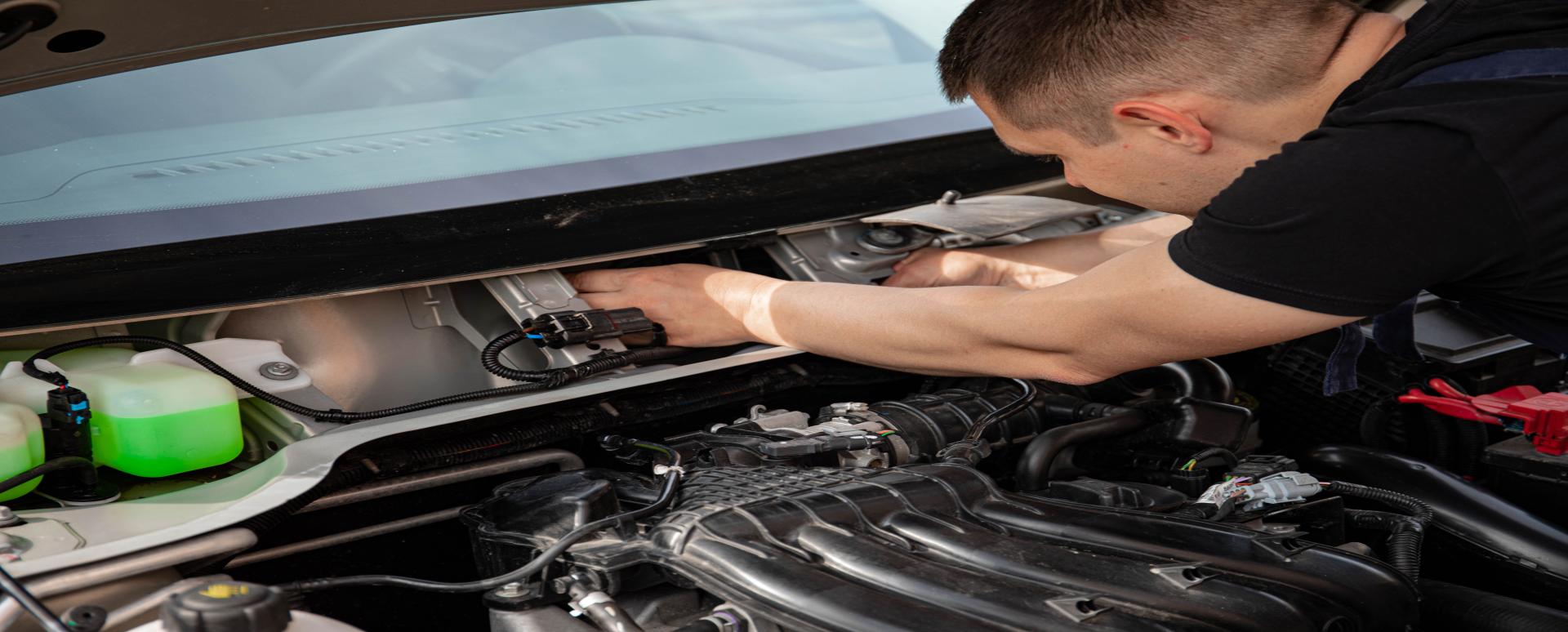
Mercedes-Benz vehicles are known for very sophisticated engineering, advanced electronics, refined performance, and an exceptional driving experience. However, the technology that makes a Mercedes so capable also means that identifying a fault isn't always as simple as looking under the bonnet.
Modern Mercedes vehicles rely on numerous sensors, electronic control modules, computers, and interconnected systems. When something isn't operating correctly, your vehicle may display a warning light, change the way it drives, or develop an intermittent problem that is difficult to identify without the right equipment.
That's where professional Mercedes diagnostics become important.
A specialist diagnostic check can communicate with your vehicle's electronic systems, retrieve fault information and help a technician determine the underlying cause of a problem. Instead of replacing components based on guesswork, professional diagnostics allow the issue to be investigated more accurately.
Here are 10 signs that it may be time to arrange a professional diagnostic check for your Mercedes.
- A Mercedes Warning Light Appears on the Dashboard
One of the clearest signs that your Mercedes requires attention is an illuminated dashboard warning light.
Modern Mercedes vehicles continually monitor systems throughout the car. When the vehicle detects an abnormal reading or malfunction, it may store a fault code and illuminate a warning indicator.
Common Mercedes warning lights include:
- Check engine light
- ABS warning light
- Battery or charging warning
- Brake warning light
- Airbag/SRS warning
- Electronic Stability Programme (ESP) warning
- AdBlue or emissions warnings
- Transmission-related warnings
- Tyre pressure monitoring warnings
Some warning lights indicate relatively minor problems, while others can point to faults that require immediate attention.
The important thing is not to assume what the warning light means based solely on the symbol. A professional diagnostic scan can retrieve stored fault information and give a Mercedes specialist a much better starting point for investigating the actual problem.
If a red warning light appears, the vehicle behaves abnormally, or you are unsure whether it is safe to continue driving, stop somewhere safe and seek professional advice.
- Your Mercedes Has Lost Power
Does your Mercedes suddenly feel sluggish?
A noticeable reduction in acceleration or engine performance can have many possible causes. Depending on the vehicle, the issue could relate to the engine-management system, turbocharging, fuel delivery, sensors, emissions equipment, transmission, or another electronic or mechanical component.
Your Mercedes may also enter a reduced-power or protective operating mode when the onboard systems detect certain faults.
Typical symptoms include:
- Slow acceleration
- Limited engine response
- Reduced performance when overtaking
- Difficulty maintaining speed
- Engine speed being restricted
- Sudden changes in performance
Rather than replacing components in the hope of solving the problem, Mercedes diagnostics can help identify relevant fault codes and live operating data so the cause can be investigated systematically.
- The Engine Is Running Roughly
A Mercedes engine should generally operate smoothly and consistently. If yours begins idling roughly, hesitating, vibrating, misfiring or behaving differently from normal, don't ignore it.
Rough running can potentially be associated with numerous components and systems, including ignition, fuel delivery, sensors, air intake or engine-management electronics.
The difficulty is that several different faults can produce very similar symptoms.
For example, an engine that hesitates during acceleration doesn't automatically mean one particular component has failed. Professional diagnostics allow technicians to examine stored fault information and operating data before recommending a Mercedes repair.
Early investigation is worthwhile because continuing to drive with some engine faults may cause additional problems.
- Your Mercedes Is Using More Fuel Than Normal
Fuel consumption naturally changes depending on traffic, driving style, vehicle load, tyre pressures and the types of journeys you make.
However, an unexplained and persistent increase in fuel consumption can indicate that something isn't operating as efficiently as it should.
Possible areas requiring investigation can include:
- Engine sensors
- Fuel-management systems
- Air intake components
- Emissions systems
- Engine temperature management
- Electrical or electronic faults
You may not see an obvious warning light immediately.
That is one reason diagnostics can be useful even when a problem isn't dramatically affecting the vehicle. A diagnostic assessment can help technicians investigate whether electronic data or stored faults provide clues to the increased fuel consumption.
- The Transmission Is Hesitating or Shifting Differently
Mercedes automatic transmissions are designed to provide smooth, refined gear changes. If you notice a significant change in transmission behaviour, professional investigation is advisable.
Symptoms can include:
- Hesitation when selecting Drive or Reverse
- Rough or unusually noticeable gear changes
- Delayed shifting
- Unexpected changes in gear
- Reduced acceleration
- Transmission warning messages
- The vehicle remaining in a particular gear
Transmission behaviour can be influenced by mechanical, hydraulic, electrical and electronic systems, so symptoms alone aren't always enough to determine the cause.
A Mercedes-specific diagnostic assessment can help identify stored transmission faults and communication issues before the appropriate repair strategy is determined.
Prompt diagnosis can also reduce the risk of continuing to drive with a fault that may become more serious.
- You're Experiencing Intermittent Electrical Problems
Electrical faults can be among the most frustrating Mercedes problems because they don't necessarily occur consistently.
Perhaps a warning message appears one morning and disappears later. Maybe an electrical feature works most of the time but occasionally stops responding.
Modern Mercedes vehicles contain multiple electronic control modules communicating across vehicle networks. As a result, an apparently simple symptom can sometimes have a more complex underlying cause.
Potential symptoms include:
- Intermittent dashboard warnings
- Starting problems
- Central locking issues
- Electrical accessories behaving unpredictably
- Multiple warning messages appearing together
- Battery or charging-related warnings
- Electronic modules failing to communicate
A professional Mercedes diagnostic check can interrogate relevant electronic systems and stored fault information, helping a specialist trace problems that may otherwise be difficult to reproduce.
- Your Mercedes Is Difficult to Start
Starting problems deserve attention, particularly when they become increasingly frequent.
A Mercedes that struggles to start can have a range of possible causes. Depending on the symptoms and model, technicians may need to investigate the battery and charging system, ignition components, fuel delivery, electronic security systems, sensors, ECU communication, or other systems.
You might notice:
- Slow or difficult starting
- Intermittent no-start situations
- The engine cranks but doesn't start
- No response when attempting to start
- Dashboard or ignition abnormalities
- Starting problems that become progressively worse
Mercedes vehicles also use sophisticated electronic ignition, immobiliser and security systems, which means certain starting problems require Mercedes-specific knowledge and diagnostic equipment.
A professional diagnosis can help distinguish between battery, key, ignition, steering-lock, ECU and other possible faults before parts are replaced unnecessarily.
- You Notice Unusual Engine Noises or Vibrations
Your vehicle doesn't always need to display a warning light to tell you something is wrong.
Changes in noise, vibration or general driving behaviour can provide important early clues.
Pay attention to new:
- Knocking or tapping noises
- Whining sounds
- Excessive engine vibration
- Vibration under acceleration
- Unusual noises when starting
- Changes in engine tone
Not every unusual noise can be diagnosed electronically. A proper assessment may involve both diagnostic equipment and a physical mechanical inspection.
That combination is valuable because fault codes should be interpreted alongside the vehicle's actual symptoms rather than treated as a diagnosis by themselves.
If your Mercedes suddenly sounds or feels different, arranging an inspection before the problem becomes worse is a sensible precaution.
- Multiple Warning Messages Appear at the Same Time
Seeing several Mercedes warning lights or dashboard messages appear simultaneously can be alarming.
However, it doesn't necessarily mean that numerous unrelated components have failed at exactly the same time.
Modern vehicle systems communicate with one another. A voltage problem, sensor fault, network communication issue or failure in one system can sometimes trigger warnings elsewhere in the vehicle.
This interconnected technology is one reason specialist Mercedes diagnostics are so valuable.
Instead of treating every dashboard message as an individual failure, a technician can examine stored fault information across the vehicle and look for relationships between the reported problems.
Finding the root cause can help prevent unnecessary replacement of perfectly functional components.
- The Same Problem Keeps Coming Back
Perhaps you've already had a warning light cleared, a component replaced or a temporary repair carried out—but the same problem has returned.
Recurring faults are a strong indication that further investigation is required.
Simply clearing a fault code doesn't repair whatever caused the fault to be recorded. Likewise, replacing the component named in a fault code isn't automatically the correct solution.
Professional diagnostics involve more than connecting a scanner and reading a code.
The technician needs to interpret the information, consider the symptoms, inspect relevant components and systems, and perform additional testing where necessary.
If the same warning light or performance problem keeps returning, a Mercedes specialist can investigate the underlying cause rather than repeatedly treating the symptom.
Why Mercedes-Specific Diagnostics Matter
Modern Mercedes-Benz vehicles are highly sophisticated machines.
Their systems can include engine and transmission control modules, ABS and stability-control technology, security systems, emissions equipment, electronic steering systems, driver-assistance technology and numerous interconnected sensors.
Generic diagnostic equipment may provide useful basic information, but Mercedes-specific equipment and specialist knowledge can provide greater access to the vehicle's systems.
The objective isn't simply to retrieve an error code. Good diagnostics involves using that information as part of a structured investigation to determine what is actually wrong.
An accurate diagnosis can help:
- Reduce unnecessary parts replacement
- Identify electronic and mechanical faults more efficiently
- Resolve recurring warning lights
- Find developing problems earlier
- Determine the appropriate repair
- Restore vehicle performance and reliability
That can ultimately save considerable time and expense compared with repeatedly replacing components based on assumptions.
Don't Ignore the Early Signs
One of the easiest mistakes Mercedes owners can make is waiting until a small problem becomes impossible to ignore.
A warning light that appears occasionally, a slight hesitation during acceleration or an intermittent electrical issue might not seem urgent today. But changes in your Mercedes' behaviour deserve investigation.
Early diagnosis gives you the opportunity to understand the problem and decide on the appropriate Mercedes repair before a developing fault potentially becomes more expensive or leaves the vehicle unable to be driven.
It is particularly important to seek professional advice when warning lights are red, braking or steering is affected, the engine is overheating, the vehicle loses significant power, or you're uncertain whether it is safe to continue driving.
Professional Mercedes Diagnostics in Tauranga
If your Mercedes is displaying warning lights, losing power, experiencing electrical problems or simply isn't driving the way it normally does, MercSpec can help identify the cause.
MercSpec is an independent Mercedes specialist based in Mount Maunganui, Tauranga, providing servicing, maintenance, Mercedes diagnostics and repairs for Mercedes-Benz vehicles.
Using specialist Mercedes diagnostic equipment, the team can access onboard vehicle systems, investigate fault information and identify problems affecting areas such as engine management, transmissions, electronic systems, sensors and ECU communication.
Because MercSpec focuses on Mercedes-Benz vehicles, customers benefit from technicians familiar with the technology, systems and common diagnostic challenges associated with the marque.
Rather than waiting for a warning light or unusual symptom to develop into a larger problem, arrange a professional diagnostic assessment.
Contact MercSpec to book your Mercedes diagnostic check and get to the cause of the problem.